


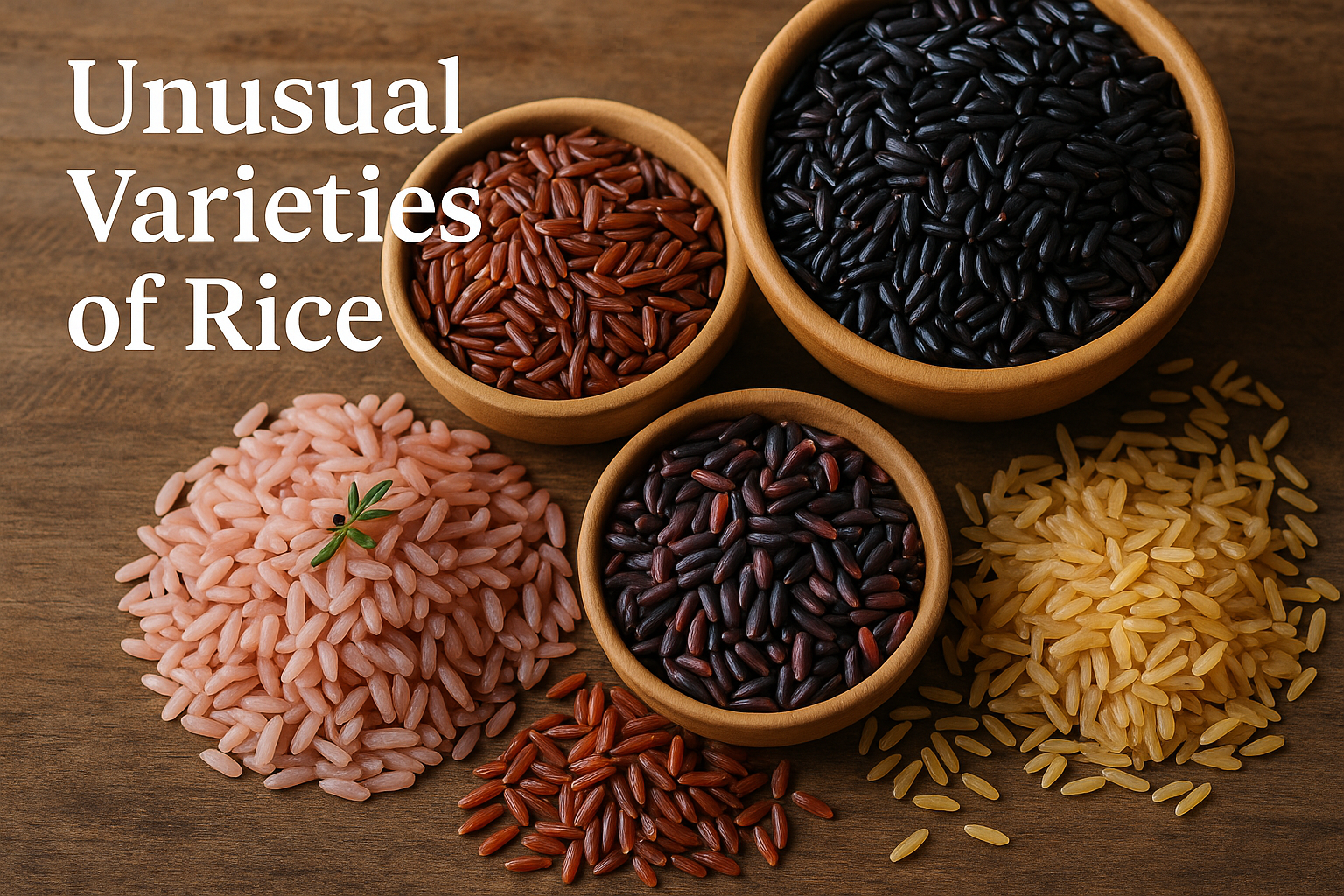
Unusual Rice Varieties
Rice is one of the world’s most widely consumed grains, but not all rice is white and plain. There are thousands of rice varieties that surprise with their color, flavor, origin, and even health benefits. In this article, we explore some of the most unusual and rare rice types, from black and red to purple, pink, and golden rice. Each of these grains has a story, a use, and something to offer on your plate.
Black Rice
Also known as "forbidden rice," black rice was once reserved only for Chinese emperors. It gets its dark color from anthocyanins — powerful antioxidants also found in blueberries. When cooked, black rice becomes deep purple and has a pleasant nutty taste with a slightly sticky texture. It's widely used in Asia for desserts and savory dishes alike.
Red Rice
This variety retains its reddish bran layer and is rich in fiber, vitamins (B, E), and minerals (iron, zinc, magnesium). Found in India, China, Bhutan, and France (Camargue red rice), red rice has a hearty texture and earthy flavor. It is excellent for side dishes, grain bowls, or as a base for pilafs and curries.
Purple Rice
Often a glutinous variety of black rice, purple rice turns a rich violet color when cooked. It is particularly popular in Thailand and Korea, used in both sweet and savory dishes. Anthocyanins give it its characteristic color and health benefits.
Pink Rice
Pink rice is rare and mostly found in Madagascar and Central Asia. The famous Uzbek Devzira rice has a pinkish hue due to iron-rich soil. Pink rice is chewy, aromatic, and perfect for pilafs and hearty dishes. It expands 4–5 times in volume when cooked and holds flavor very well.
Golden Rice
Golden rice is not naturally colored but is genetically modified to produce beta-carotene, a source of vitamin A. Developed in the late 1990s as a solution to vitamin A deficiency, golden rice has an orange-yellow hue. While not commonly available in markets, it is used in humanitarian nutrition programs.
Culinary Uses
- Black Rice: Used in Asian desserts with coconut milk, as well as salads and gourmet side dishes.
- Red Rice: Ideal for spicy dishes, stir-fries, and salads. Bhutanese red rice pairs beautifully with cheese-based sauces.
- Purple Rice: Great for sticky rice dishes, sweet puddings, and special occasion meals.
- Pink Rice: Popular in Central Asian pilafs. Devzira rice is essential in authentic Uzbek plov.
- Golden Rice: Prepared just like white rice, but with extra nutritional value.
Health Benefits
Colored rice varieties are rich in nutrients absent in white rice:
- Antioxidants: Especially anthocyanins in black and purple rice help fight inflammation and oxidative stress.
- Fiber and Minerals: Red and pink rice varieties contain high levels of iron, zinc, magnesium, and vitamins B1, B2, and E.
- Lower Glycemic Index: These varieties release sugar slower, making them better for blood sugar control.
- Beta-Carotene in Golden Rice: Helps combat vitamin A deficiency, especially in developing countries.
Fun Facts
- Black rice was once banned for commoners in ancient China.
- There are over 40,000 varieties of cultivated rice worldwide.
- Some rice varieties, like wild rice, are technically not rice but aquatic grass.
- The red Bhutanese rice is one of the few whole-grain rice varieties that cooks quickly.
- Pink rice from Madagascar is grown using traditional flooding techniques and is hand-harvested.
Conclusion
Exploring unusual rice varieties is not only a journey through taste and color but also a way to add more nutrients and diversity to your diet. These rare types offer unique textures, cooking properties, and a rich cultural history. Whether you're preparing plov with Devzira, pudding with black rice, or a vibrant salad with red rice — let rice surprise you.
