


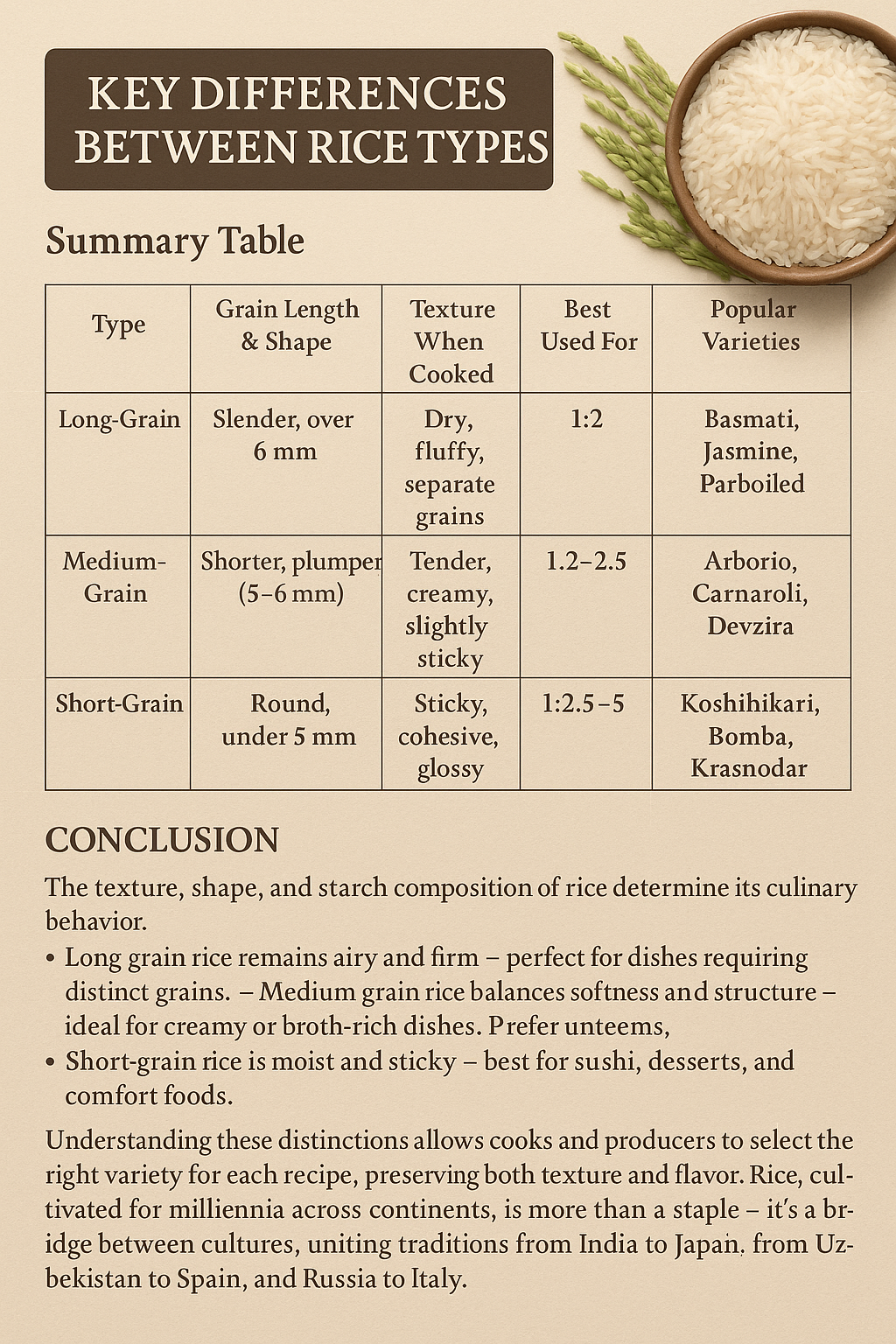
Differences Between Long-Grain, Medium-Grain, and Short-Grain Rice
General Overview of Rice Types
Rice is classified by grain length into three main categories: long-grain, medium-grain, and short-grain. The size and shape of the grain directly affect texture, taste, and how the rice behaves when cooked. The longer the grain, the less sticky it tends to be after cooking. Each type has unique characteristics and culinary uses.
Long-Grain Rice
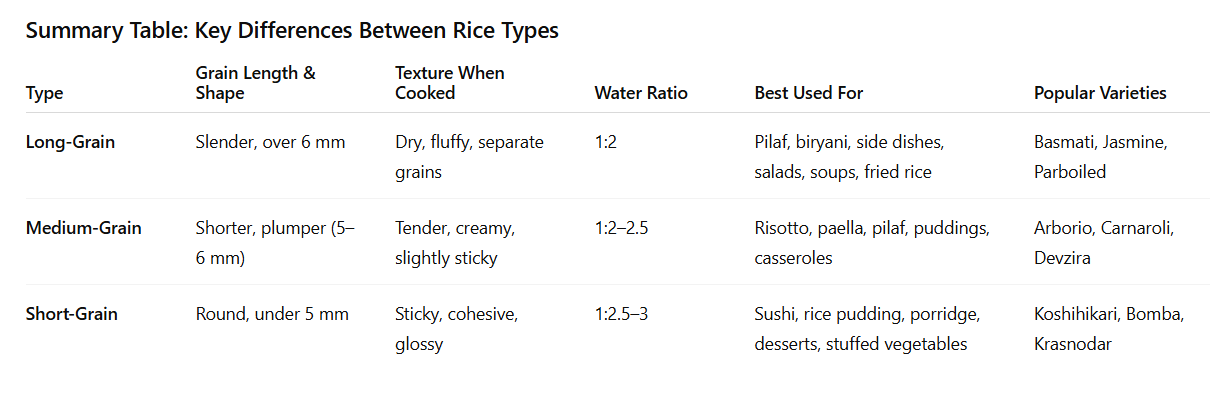
Long-grain rice has slender, elongated grains over 6 mm long—about four to five times longer than they are wide. Because of its high amylose and low amylopectin content, long-grain rice stays separate, fluffy, and light when cooked. Each grain remains distinct rather than clumping together. The texture is firm, dry, and slightly elastic. This makes long-grain rice ideal for dishes that need a loose structure—pilaf, side dishes, rice salads, and soups. It also holds up well in saucy dishes without turning into a paste.
Cooking Characteristics
The high amylose level in long-grain rice means the starch gelatinizes less during cooking. The grains absorb a moderate amount of water and retain their shape well. When cooked, they elongate slightly but remain firm and intact. Because of its clean flavor and light texture, long-grain rice is the most versatile type, suitable for both everyday meals and complex dishes.
Typical Cooking Method
Long-grain rice is best cooked using the absorption method. Rinse it several times under cold water to remove excess starch—this step is especially important for aromatic varieties like basmati. For firmer texture, soak the rice for 30–60 minutes before cooking. The ideal water ratio is about 1 part rice to 2 parts water (or slightly less for soaked rice). Cook covered on low heat for 15–20 minutes, then let it rest for another 10 minutes off the heat. Do not stir during cooking. For extra aroma, the grains can be lightly toasted in butter or oil before adding water.
Culinary Uses
Long-grain rice works best in dishes where each grain should remain separate:
- Pilaf and biryani — the rice absorbs spices and oils without becoming sticky.
- Side dishes — simple steamed or buttered rice alongside meat, fish, or vegetables.
- Salads — its dry texture keeps the salad light.
- Soups — grains hold their shape and do not dissolve.
- Fried rice — particularly when made with day-old rice; long-grain varieties fry evenly without clumping.
Popular Long-Grain Varieties
- Basmati Rice – Premium Indian variety, the name means “fragrant” in Hindi. The long, thin grains have a distinct nutty aroma. When cooked, basmati becomes fluffy, elongates further, and never sticks. It is the traditional choice for biryani, pilaf, and curry side dishes.
- Jasmine Rice – Thai long-grain rice with a delicate floral scent. It cooks up soft and slightly clingy but retains its shape. Used widely in Southeast Asian cuisine, jasmine rice pairs well with spicy stir-fries, curries, and coconut-based desserts.
- Parboiled Rice – Also known as “converted” or “golden” rice, it is steamed before milling, locking nutrients into the grain. It keeps its shape exceptionally well, doesn’t stick, and has a firmer texture even after long cooking. Suitable for healthy side dishes, pilaf, and salads.
Medium-Grain Rice
Medium-grain rice has shorter, plumper grains, about 5–6 mm long—roughly two to three times longer than they are wide. It absorbs more water than long-grain rice and releases more starch during cooking. As a result, it turns softer and slightly creamy, with a subtle stickiness. It’s tender but not mushy, making it suitable for dishes that need a bit of cohesion without turning into porridge.
Cooking Characteristics
Medium-grain rice contains more amylopectin, giving it a smooth, cohesive texture. The grains cling lightly together but remain distinguishable. When cooked correctly, it has a delicate balance—neither too dry nor too sticky. The flavor is often described as rich and slightly sweet. Because of this versatility, it’s ideal for risotto, paella, and some desserts.
Cooking Method
Rinsing medium-grain rice depends on the recipe. For creamy dishes like risotto or puddings, do not rinse—the surface starch is necessary to create a velvety consistency. For lighter dishes like soups or pilaf, rinse the rice well to prevent excess stickiness.
Water ratio: 1 part rice to 2–2.5 parts water. Cooking time is usually 15–20 minutes. In risotto, broth is added gradually, stirring constantly, allowing starch to thicken the liquid into a sauce. For paella, all liquid is added at once and left undisturbed to form the signature crispy crust (“socarrat”) at the bottom of the pan.
Popular Medium-Grain Varieties
- Arborio – Classic Italian rice used for risotto. The oval grains have a high starch content, creating a creamy sauce while keeping a slightly firm core. It readily absorbs the flavors of broth, wine, and butter.
- Carnaroli – Often called the “king of rice” in Italy. Slightly larger than Arborio, it holds its shape better and produces a silkier risotto. The center remains al dente even after prolonged cooking.
- Devzira – Traditional Uzbek variety used for authentic pilaf. The grains are dense and slightly reddish, coated with rice flour. After long soaking, they swell and absorb oil and broth, producing a fragrant, separate, yet juicy pilaf.
Culinary Uses
Medium-grain rice bridges the gap between firm long-grain and sticky short-grain types. It’s perfect for:
- Risotto – Creamy texture with firm grains.
- Paella – Soaks up broth and spices while staying plump.
- Pilaf (plov) – Absorbs flavors and oils without falling apart.
- Rice puddings and casseroles – Creamy yet structured consistency.
- Sushi (some varieties) – Japanese rice technically falls between medium and short categories.
Short-Grain (Round-Grain) Rice
Short-grain rice is easily recognized by its short, nearly round grains—usually under 5 mm long, almost as wide as they are long. It has the highest starch content, especially amylopectin, which makes it much more sticky and creamy when cooked. The grains swell considerably and cling together, forming a smooth, cohesive texture.
Cooking Characteristics
Short-grain rice becomes moist, glossy, and sticky after cooking. Each grain adheres to the others, creating a soft, tender consistency. Rather than remaining separate, the grains merge into a uniform, creamy mass. This makes short-grain rice ideal for dishes where cohesiveness or creaminess is desired—sushi, rice puddings, and many traditional Asian desserts. Its strong absorption ability allows it to soak up sauces, broths, and seasonings.
Cooking Method
Short-grain rice must be rinsed thoroughly before cooking—at least three to five times—until the water runs clear. This removes excess surface starch and prevents over-stickiness. Many chefs also soak it for 20–30 minutes before boiling; this ensures uniform softness and prevents the outer layer from breaking before the core is cooked.
For cooking on the stovetop, use 1 part rice to 2.5 parts water for standard varieties. Bring to a boil, then simmer on low heat under a lid for about 10 minutes, and let rest for another 10 minutes off the heat. Do not stir while cooking. For sticky rice (glutinous rice used in Asian desserts), steaming instead of boiling is common—it creates the signature chewy texture.
Popular Short-Grain Varieties
- Japanese Sushi Rice (Koshihikari, Akita Komachi, etc.) – The most famous type of short-grain rice, cultivated mainly in Japan. When cooked, the grains become glossy and cohesive but retain individual shape. It’s the base for sushi, onigiri (rice balls), and donburi.
- Bomba Rice (Spain) – A premium Spanish round-grain rice grown in Valencia. It can absorb three times its volume in liquid without breaking, making it ideal for paella. The grains remain plump, juicy, and separate, while the bottom layer forms the prized crispy crust (socarrat).
- Krasnodar Rice (Russia) – A domestic short-grain rice grown in southern Russia. It is soft, starchy, and perfect for porridge, puddings, and sushi. It cooks into a creamy, mild base and is one of the northernmost rice varieties cultivated worldwide.
Culinary Uses
Short-grain rice is best where tenderness and creaminess matter more than separateness:
- Sushi and rolls – Holds shape and sticks together without gluey residue.
- Rice porridges and puddings – Becomes creamy and smooth when cooked in milk.
- Casseroles and pies – Helps bind ingredients.
- Asian desserts – Used for sticky mango rice, mochi, and sweet rice cakes.
- Soups – Adds body and thickness to broths like kharcho or congee.
Cooking Recommendations for Each Rice Type
1. Long-Grain Rice
Preparation: Rinse several times until the water runs clear to remove surface starch. Optionally soak for 30–60 minutes (especially for basmati) to shorten cooking time and improve fluffiness.
Ratio: 1 part rice to 2 parts water.
Cooking: Bring to a boil, reduce heat, and simmer covered for 15–20 minutes without stirring. After water is absorbed, rest for 10 minutes.
Result: Light, airy, and separate grains.
Best for: Pilaf, biryani, side dishes, salads, soups, or fried rice.
2. Medium-Grain Rice
Preparation: Rinse only if a non-creamy result is desired. For risotto or paella—do not rinse.
Ratio: 1 part rice to 2–2.5 parts water.
Cooking:
- Risotto: Add hot broth gradually, stirring constantly until creamy.
- Paella: Add all broth at once, simmer uncovered, and let a crust form at the bottom.
- Pilaf (Plov): Soak Devzira rice for several hours, then cook with meat and spices using minimal stirring.
- Result: Soft, creamy texture with a tender but structured bite.
- Best for: Risotto, paella, pilaf, rice casseroles, and puddings.
3. Short-Grain Rice
Preparation: Rinse thoroughly 3–5 times; soak for 20–30 minutes.
Ratio: 1 part rice to 2.5–3 parts water.
Cooking:
- For sushi: Cook covered on low heat, rest, then season with rice vinegar and sugar mixture.
- For porridge: Use more water or milk, stir frequently, and cook slowly until creamy.
- For desserts: Steam or bake with milk and sugar.
- Result: Sticky, glossy, and cohesive grains.
- Best for: Sushi, puddings, porridges, stuffed vegetables, and desserts.
Cultural and Historical Insights
Origins and Spread
Rice is one of humanity’s oldest cultivated crops. Archaeological evidence traces its cultivation in China to over 7,000 years ago. From Asia, rice spread westward to India, Persia, and eventually to Europe. In Russia, rice appeared in the early 18th century under Peter the Great, but large-scale cultivation began in the Soviet era, mainly in the Kuban region — now home to the well-known Krasnodar rice.
Symbolism and Tradition
Rice has long symbolized fertility, prosperity, and life. In many cultures, it’s used in rituals and celebrations:
- India: Sweet milk rice (kheer) is cooked during religious festivals as an offering to gods.
- Japan: The Emperor still performs a sacred rice-planting ceremony each spring.
- China: During the Lunar New Year, sticky rice cakes (nian gao) represent rising fortune.
- Europe: Throwing rice at weddings symbolizes abundance and fertility.
Culinary Diversity
Regional cuisines developed unique rice traditions:
- India and the Middle East — long-grain basmati for fluffy, aromatic pilaf and biryani.
- Italy and Spain — medium-grain arborio, carnaroli, and bomba for creamy or broth-rich dishes.
- East Asia — short-grain japonica for sushi, rice balls, and sticky desserts.
- Russia and Central Asia — Devzira and Krasnodar rice for pilaf, stuffed vegetables, and porridge.
Fun Facts
- Building workers of the Great Wall of China used sticky rice paste mixed with lime to strengthen bricks.
- Producing 1 kg of rice requires around 5,000 liters of water, explaining why it’s grown mainly in wet, monsoon climates.
- In Spanish paella, the golden crispy bottom layer — socarrat — is considered the most prized part of the dish.
- In Japan’s Edo period, rice was used as currency; a samurai’s salary was measured in “koku” — enough rice to feed one person for a year.
Conclusion
The texture, shape, and starch composition of rice determine its culinary behavior.
- Long-grain rice remains airy and firm — perfect for dishes requiring distinct grains.
- Medium-grain rice balances softness and structure — ideal for creamy or broth-rich dishes.
- Short-grain rice is moist and sticky — best for sushi, desserts, and comfort foods.
Understanding these distinctions allows cooks and producers to select the right variety for each recipe, preserving both texture and flavor. Rice, cultivated for millennia across continents, is more than a staple — it’s a bridge between cultures, uniting traditions from India to Japan, from Uzbekistan to Spain, and from Russia to Italy.
